
● Industries / IND-07 SPEC. NO. EMS-SEC-01
Smart Glasses for Security & Law Enforcement
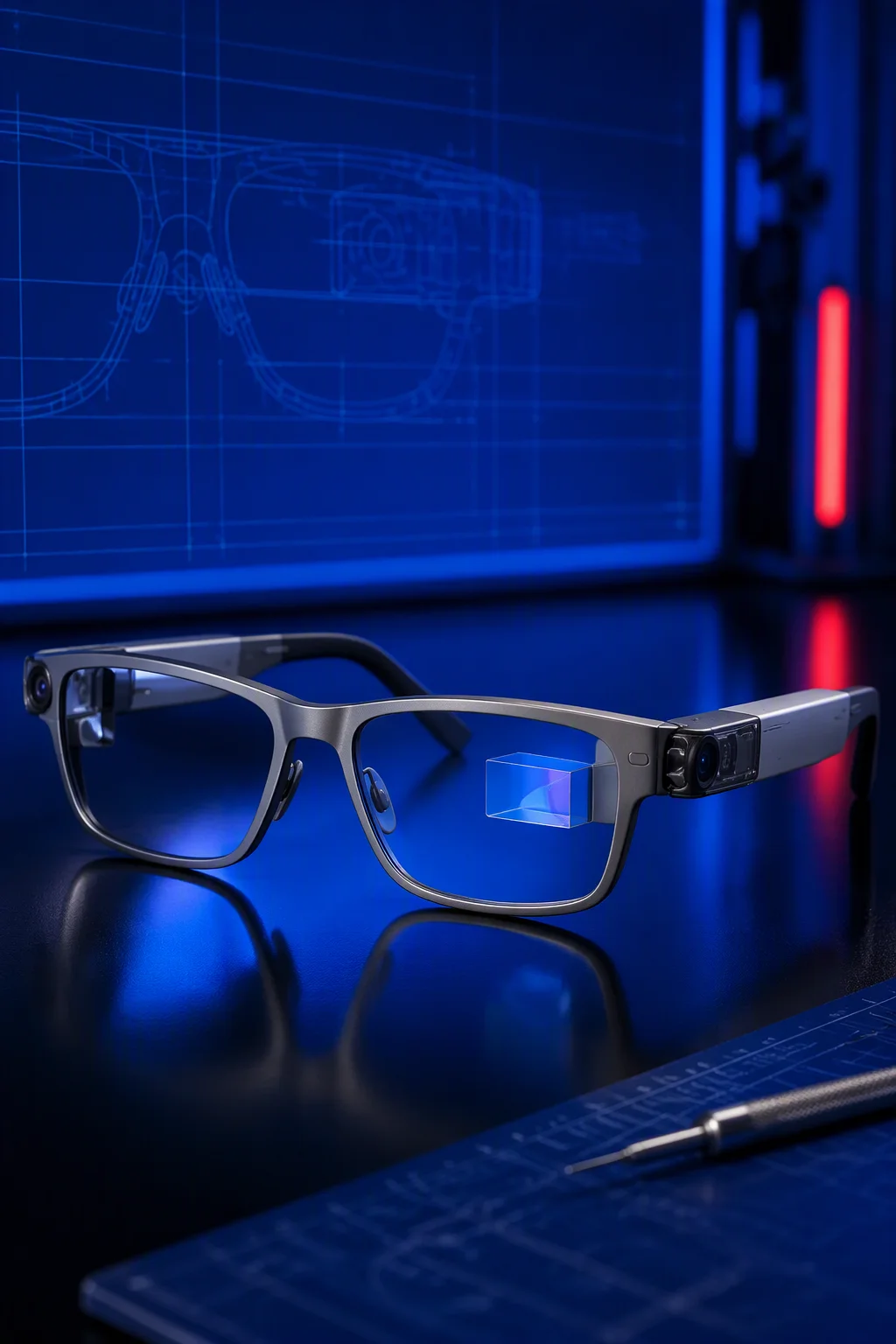
Florida police quietly bought smart glasses and U.S. immigration officers now wear them — the body-worn camera is moving from the chest to the eyes. Glasses-based capture delivers first-person evidence, 1080p livestream backhaul and a privacy LED, with an 8h+ duty battery and encrypted storage.
● Enforcement Pain Point Map SPEC. NO. EMS-SEC-PN
Every Recording Gap, Mapped to a Reference Solution
| Enforcement pain point | The data behind it | Our reference solution |
|---|---|---|
| Evidence gaps in incidents | Body-worn camera market keeps growing | First-person POV capture, 12MP |
| Chest-cam limitations | Body cameras see what the body faces | Glasses see what the officer sees |
| Privacy optics | LED indicator is the industry baseline | Visible capture LED + physical switch |
| Duty-shift battery | 8h+ shifts outlast chest-cam batteries | 8h+ battery with hot-swap case |
| Live command visibility | 1080p video streaming supported | Livestream backhaul during operations |
| Data integrity | 32–128 GB encrypted local storage | Chain-of-custody metadata |
| Procurement compliance | Agencies require local review | CE / FCC documentation package |
● Reference Solutions SPEC. NO. EMS-SEC-PRD
Three Capabilities a Program Evaluates First
First-Person Evidence
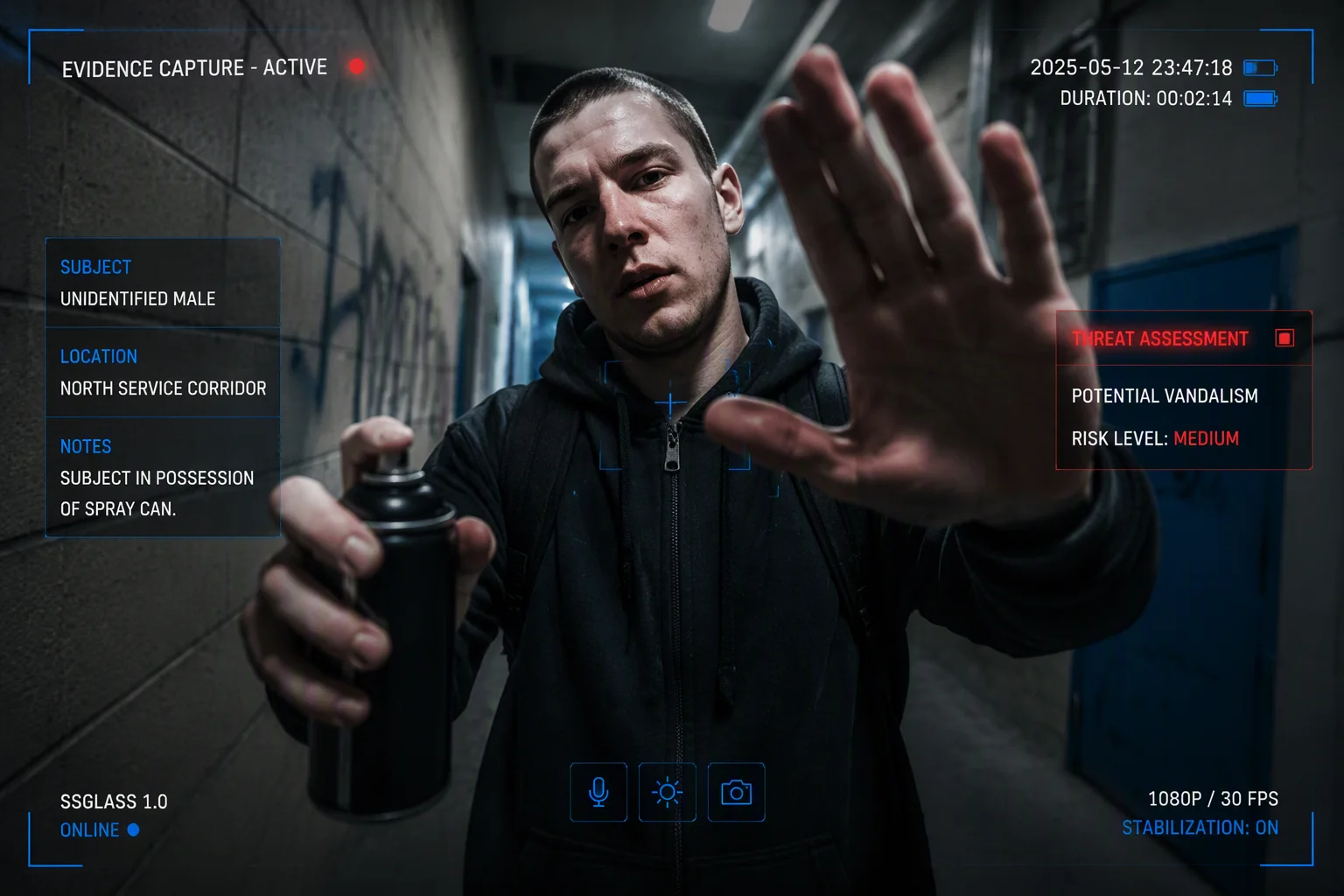
12MP stills and 1080p video from the officer's line of sight — the same view the report describes.
SEC-02Live Backhaul
1080p livestream to command during operations, with a visible capture indicator throughout.
SEC-03Privacy Engineering
Capture LED and a physical camera switch as standard — design that survives public scrutiny.
● Compliance & Data Security SPEC. NO. EMS-SEC-CMP
Recording That Holds Up in Review
Evidence-grade capture only holds up if the pipeline around it survives audit. Every unit ships with encryption, access control and timestamped metadata, and deployment remains subject to local law review — the design goal is a recording that defends itself in front of a reviewer, not just a camera that works.
| Topic | Reference design |
|---|---|
| Capture LED | Visible indicator while recording |
| Physical switch | Single-button camera disable |
| Encryption | Encrypted on-device storage |
| Storage | 32–128 GB local, no cloud by default |
| Access control | Passcode plus companion-app policies |
| Retention | Agency-controlled export and deletion |
| Certification | CE, FCC, UN38.3 documentation |
| Jurisdiction | Deployment subject to local law review |
| Audit | Metadata timestamps for chain of custody |
● Program Specs SPEC. NO. EMS-SEC-STS
Built Around the Duty Day
● Evidence Notes SPEC. NO. EMS-SEC-DEP
Evidence Capture Built for Review
First-person capture adds context body cameras miss: what the officer looked at, said and recorded, timestamped and encrypted at rest with per-device keys. Evidence metadata records device ID, timestamp and location where policy allows, matching the metadata schema of mainstream body-worn camera platforms.
The privacy LED is hard-wired to the pipeline, and capture policy — LED behavior, retention defaults and offboarding — is managed centrally from the fleet dashboard.
Battery life targets a full shift: 8+ hours of intermittent capture with hot-swap case top-ups, and IP54+ sealing handles weather and field conditions.
Agencies pilot with 100 units and a policy workshop: we document the workflow, the chain-of-custody format and the evidence export path before the first deployment.
The body-worn camera market keeps growing as agencies standardize on evidentiary video; glasses extend the same doctrine to first-person perspective without adding belt weight, and evidence exports follow standard container formats so existing review software ingests files without vendor lock-in. Chain-of-custody metadata is embedded at capture time, so timestamps and device identifiers survive export intact.
● Next Step SPEC. NO. EMS-SEC-CTA
Evaluate a Glasses-Based Capture Pilot
Security programs start with a 14-day prototype evaluation — send your use case and we reply within 24 hours with a compliance-first rollout note.