● Capabilities / PL-03 SPEC. NO. EMS-ARD-01
AR Display Glasses OEM/ODM
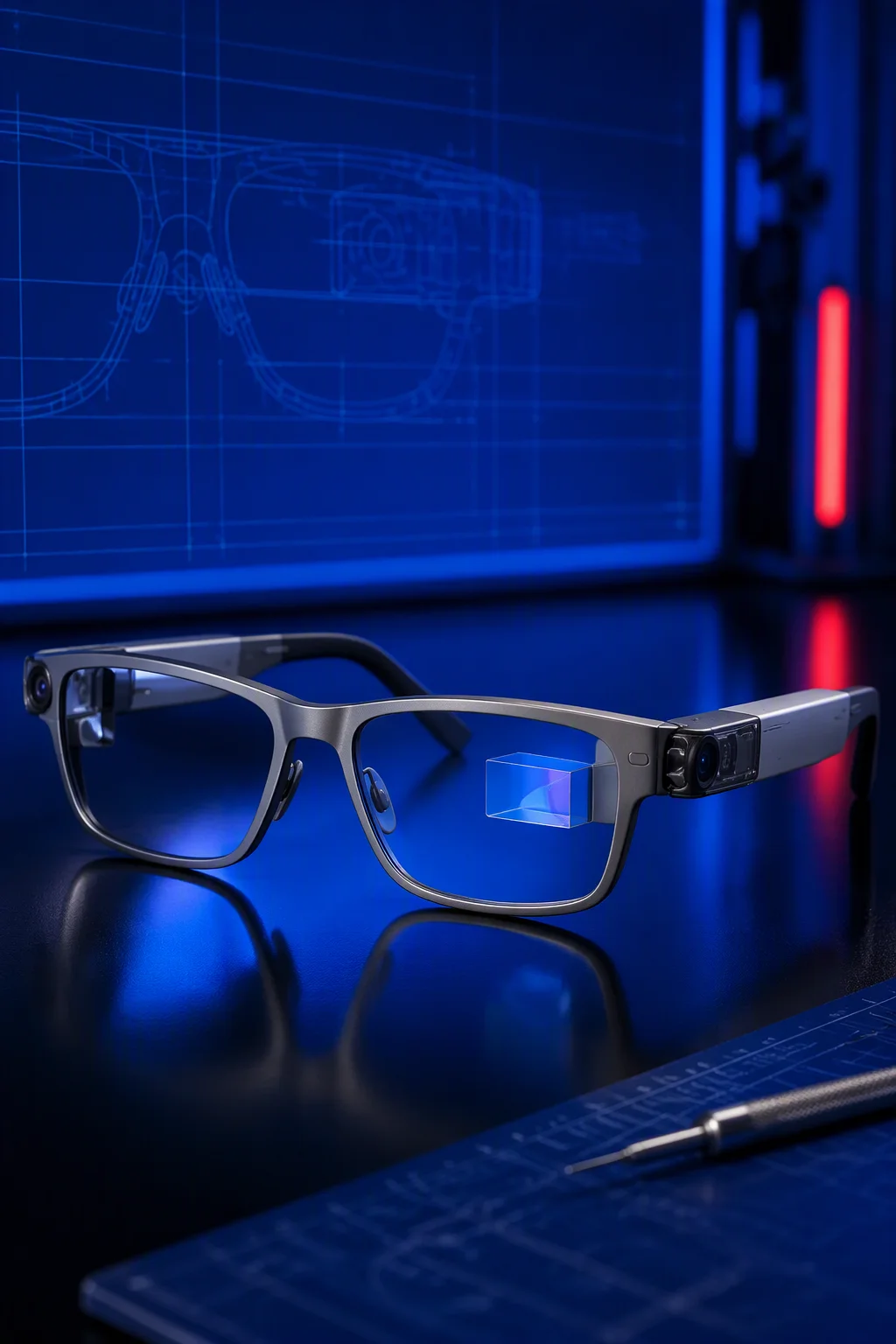
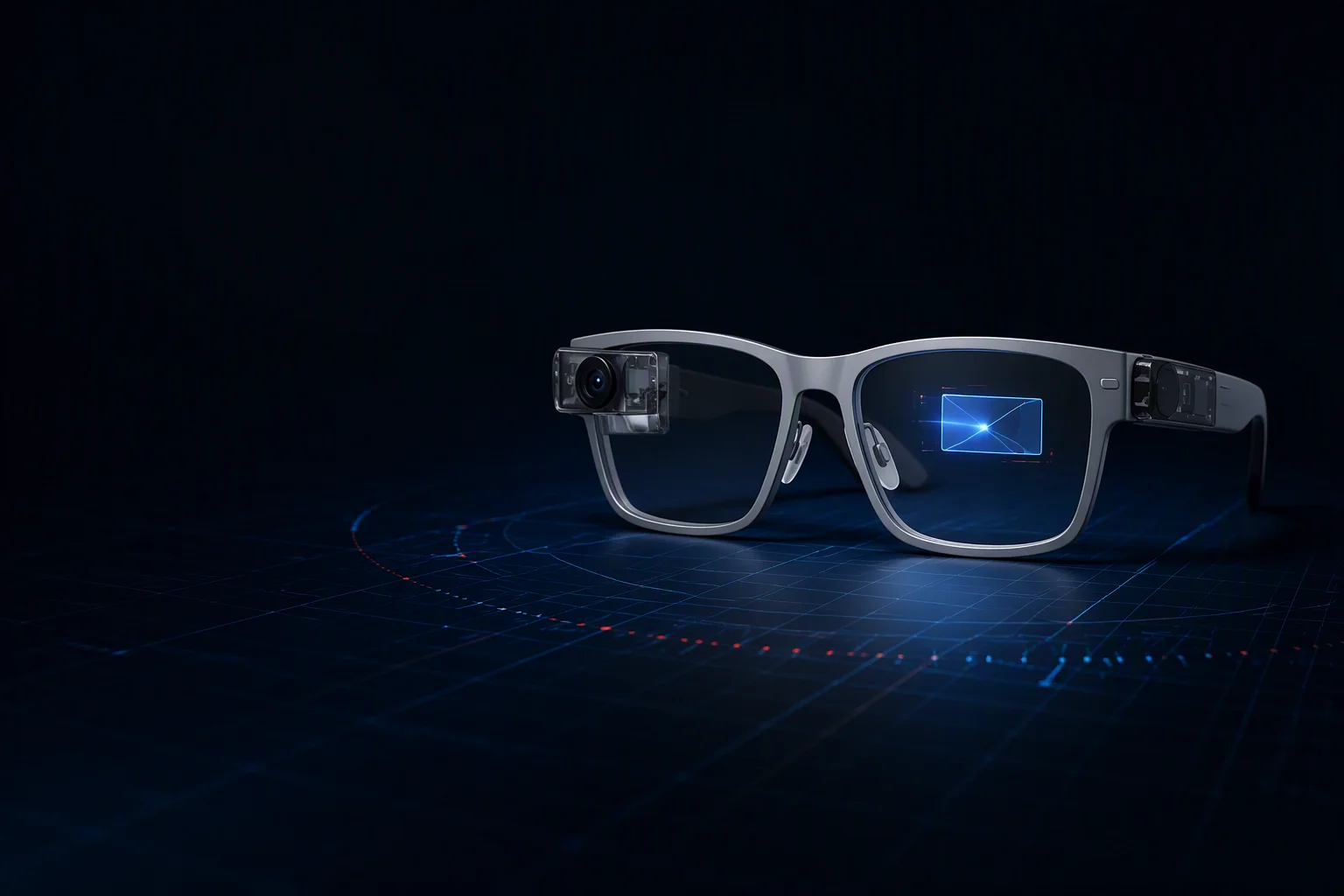
AR display glasses split into two proven optical routes: Micro-OLED with waveguide for see-through information, and BirdBath for immersive viewing. Our platforms span 640×400 to 1080p per eye at 37–80g, with X1-class 3ms latency and prescription-ready frames.
● Optical Specs SPEC. NO. EMS-ARD-SPEC
Reference Display Specification
| Parameter | Reference value | Notes |
|---|---|---|
| Display route | Micro-OLED + waveguide / BirdBath | See-through vs cinematic |
| Resolution | 640×400 – 1080p per eye | Entry to flagship tiers |
| Brightness | Up to 1000 nits output | Sunlight-readable |
| Panel density | Up to 3000 PPI | Enterprise Micro-OLED grade |
| Weight | 37–80 g | Per route and frame |
| Field of view | 26–52° | Virtual screen up to 171" class |
| Prescription | Clip-in / bonded | Ophthalmic lab partner |
| Chip | Qualcomm AR1 / X1-class | Dedicated display engine |
| Tracking | Native 3DoF | 6DoF optional |
| Latency | 3ms motion-to-photon | X1-class frame insertion |
| Battery | 140–700 mAh + case | Charging case extends to full day |
| MOQ | 100 pcs | Per SKU |
| Lead time | 14 d / 30–45 d | Samples / mass production |
● Optical Assembly SPEC. NO. EMS-ARD-OPT
Full-Lamination Optics, Measured Not Claimed
The core step in any display route is lamination — bonding the micro-OLED engine to the waveguide with sub-micron alignment. The same full-lamination process behind a 25g waveguide prototype, the lightest class of AR optics in production, is applied to every display platform we ship.
Anti-reflective coatings and adhesive layers are applied and cured in-house, then every unit passes optical inspection for uniformity, color and ghosting. We hold the alignment fixture tolerances and the clean-room environment, so yield issues stay our problem, not yours.
For BirdBath routes, the mirror stack is assembled and collimated to a fixed virtual distance — a thinner optical train that is simpler to certify and ship as a sealed module.
Optics are the moat in AR glasses. Our waveguide bonding line runs at class-10,000 cleanliness with per-lens inspection, and the micro-OLED engine is sourced from tier-one panel makers with a locked BOM — which is why our 37 g reference frame holds 3 ms latency without thermal throttling.
\n Optics Comparison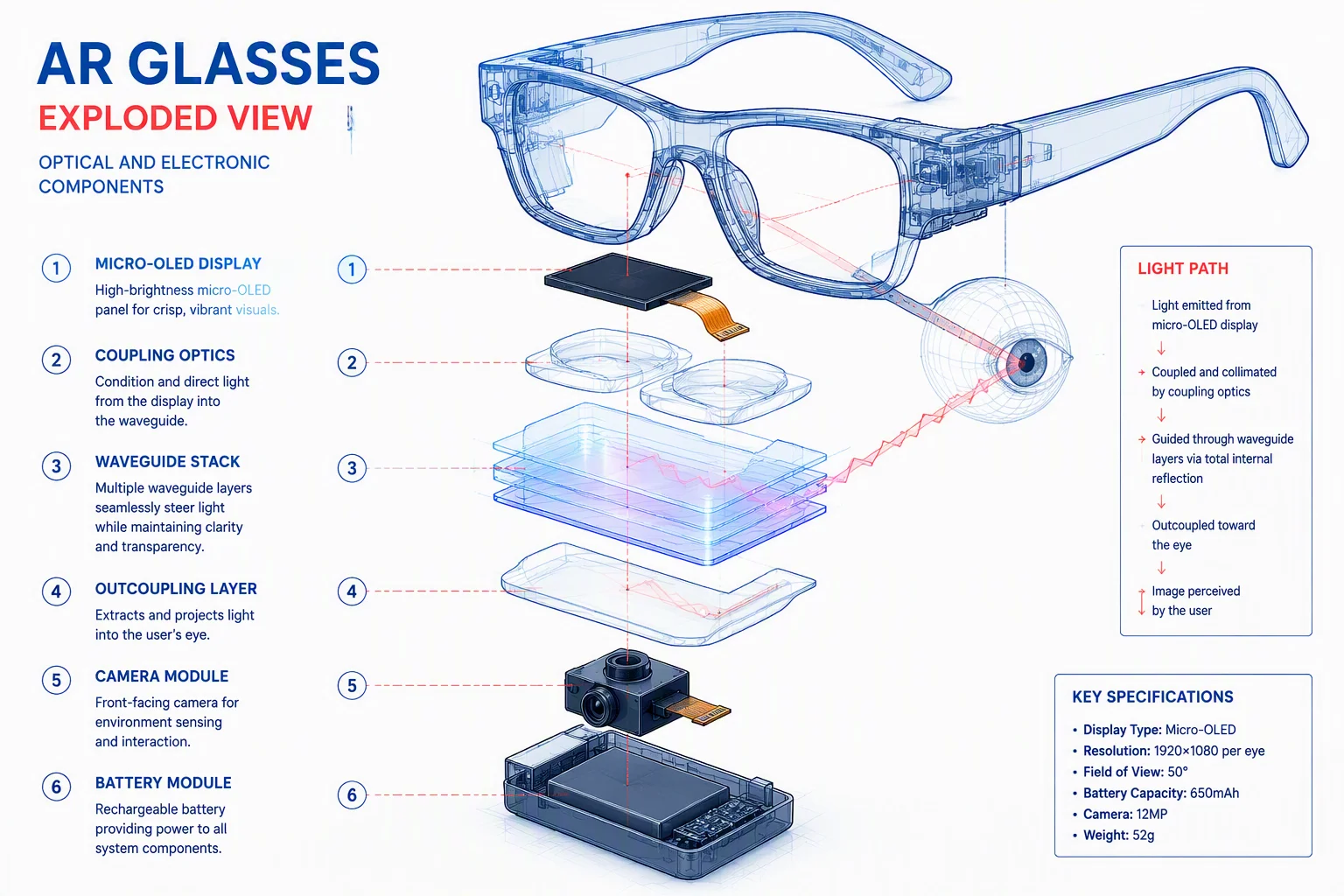
● Use Scenes SPEC. NO. EMS-ARD-APP
Information Where the Eye Already Looks
Live Subtitles
Real-time captions overlaid at the edge of vision during meetings and movies.
HUD Navigation
Turn-by-turn directions projected ahead without lifting your phone.
Cinematic Viewing
A 171-inch-class virtual screen for travel and entertainment.
Multi-Tasking
A second screen for calls, messages and notes while your hands stay busy.
● Engine & Latency SPEC. NO. EMS-ARD-CHP
A Display Engine Built for Low Latency
| Capability | Reference value | What it means |
|---|---|---|
| Motion-to-photon | 3ms | X1-class pipeline, head-locked content |
| Spatial tracking | Native 3DoF | UI stays anchored without controllers |
| Frame insertion | Dynamic | Smoother motion in 60Hz content |
| Brightness adaptation | Auto | 1000 nits peak, dims at dusk |
| Power delivery | 140–700 mAh + case | All-day top-ups on the go |
| SDK | Display + app SDK | Brand UI and data fields |
| Prescription | Clip-in / bonded | Rx lenses without optical redesign |
● Optics Notes SPEC. NO. EMS-AR-DEP
Decided in the Optics Lab, Not in Marketing
Our waveguide stacks are bonded in a class-10,000 environment with per-lens inspection, and the micro-OLED engine runs at 3 ms class latency so text stays sharp in motion. Brightness tiers are qualified for indoor and outdoor use, and prescription integration is engineered from the start.
For developers, the SDK exposes display, IMU and camera streams with sample apps for subtitles, HUD and navigation, so your software team can evaluate real frames-per-second before hardware freezes.
Clients typically begin with the subtitle and HUD use cases, then expand into navigation and media as their app matures — the same display engine serves all four, and every unit ships with per-panel uniformity and latency test data your engineers can audit.
Thermal design keeps the projector cool without fans: the 37 g reference frame runs a passive heat path rated for two-hour continuous display sessions, and brightness throttles gracefully in direct sun.
Prescription integration is not an afterthought: clip-in and bonded options share the same optical bench, and the SDK exposes per-eye diopter calibration for users who switch between frames.
For evaluation, we ship a demo kit with the subtitle and HUD apps preloaded, so your product team can judge text clarity and latency against your own use cases within days of unboxing.
● Next Step SPEC. NO. EMS-ARD-CTA
AR Display Route Evaluation
A two-page optics comparison and a sample roadmap — sent within 24 hours.