● Guide Directory SPEC. NO. EMS-DG-DIR
Eight Guides, Sorted by Decision Order
Start with the choice that locks the most cost — the display route — then work down through structure, audio and compliance. The directory below mirrors that sequence.
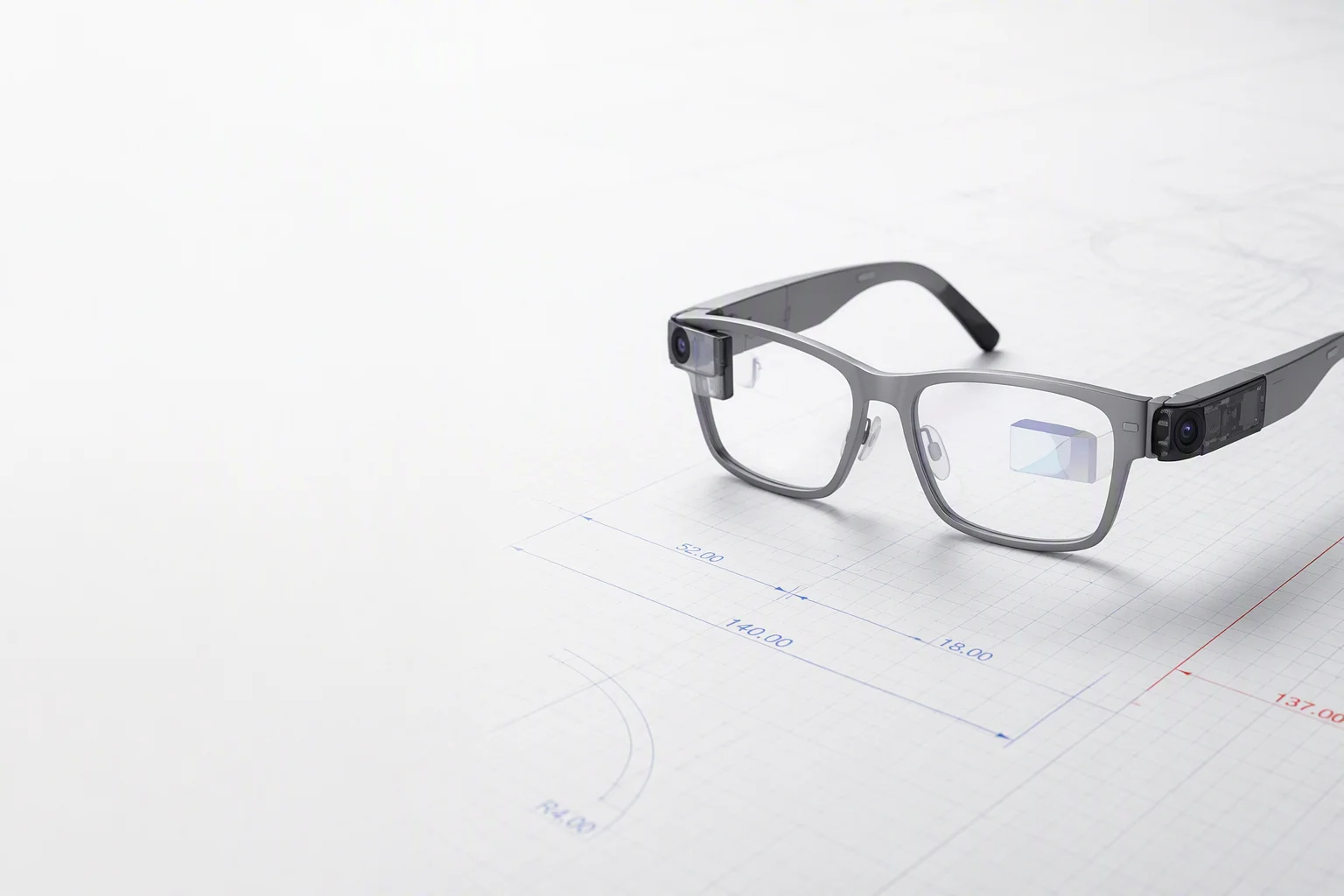
Optics Selection
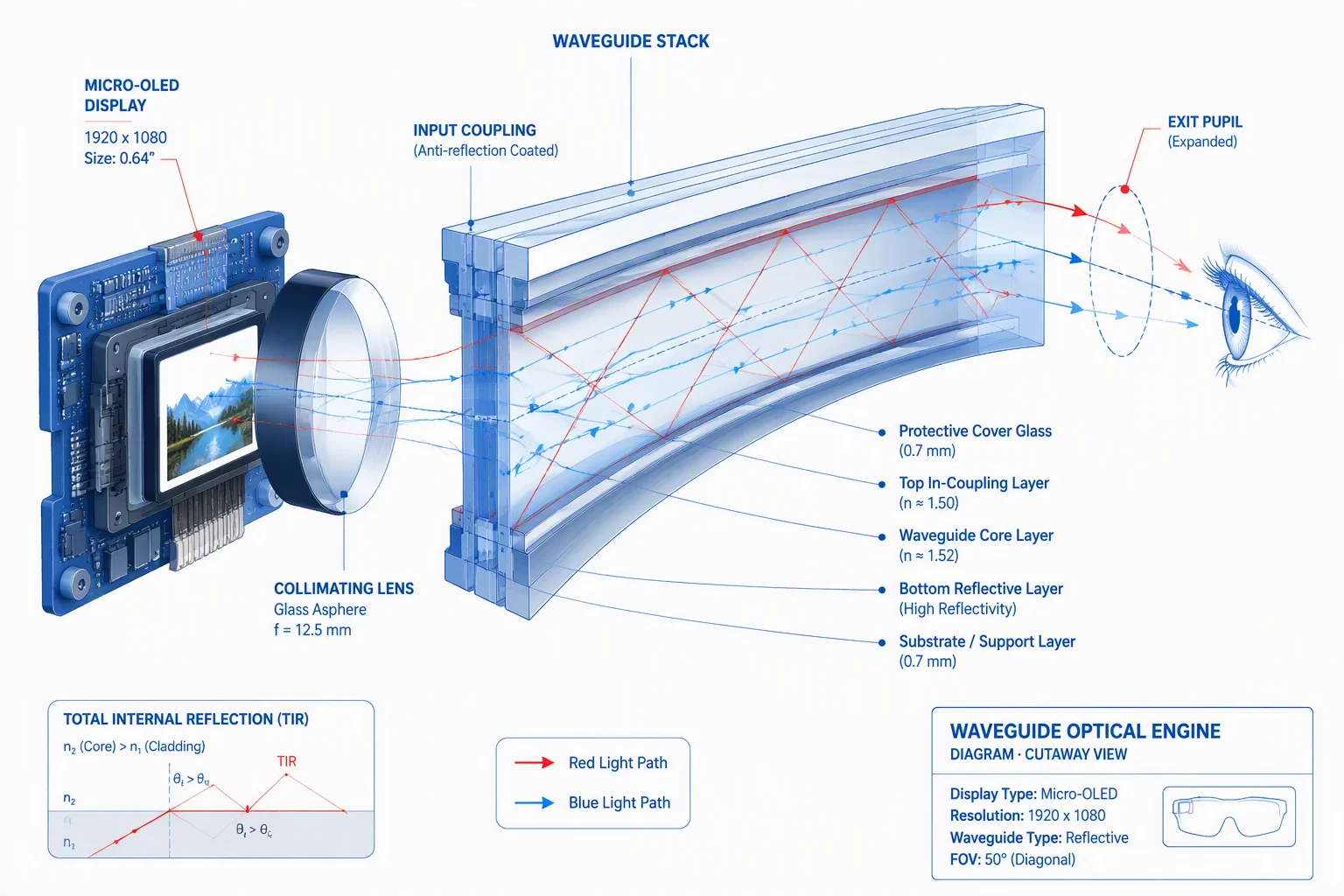
Micro-OLED + waveguide vs BirdBath, matched to weight, transparency and price band.
G-02Display Parameters
Resolution, brightness and FoV trade-offs, from 640×400 monocular to 1080p per eye.
G-03Battery & Charging
140–170 mAh frames up to 700 mAh display builds, plus charging-case top-ups.
G-04Acoustics & Mic Arrays
4-mic AI ENC, wind-noise suppression and open-ear drivers tuned in our acoustic chamber.
G-05Structure & Materials
Weight budgets from 27.6 g, hinge durability at 20,000 cycles, nose-pad and temple tuning.
G-06Certification Planning
RED / EMC / LVD / RoHS / GPSD stacking and the 4–12 week CE window, planned in parallel.
G-07Lithium Battery Shipping
UN38.3 + MSDS, IATA DGR packing and the ≤100 Wh declaration on air waybills.
G-08Platform Selection
Qualcomm, MediaTek and Unisoc-class boards matched to cost, power and AI workload.
● Display Routes SPEC. NO. EMS-DG-DSP
Micro-OLED + Waveguide vs BirdBath, Side by Side
The two dominant display routes differ in weight, transparency and price. This comparison is the basis of the selection card below.
| Parameter | Micro-OLED + Waveguide | BirdBath |
|---|---|---|
| Resolution | 640×400 – 1080p / eye | 1080p-class |
| Brightness | 1000 nits-class output | High, cinema-tuned |
| Field of view | 25–50° per eye | 40–60° |
| Frame weight | 37–80 g | 55–90 g |
| Transparency | High (see-through) | Opaque screen |
| Best for | HUD, navigation, subtitles | Movie and video viewing |
| Wholesale band | USD 150–400 | USD 120–300 |
● Selection Card SPEC. NO. EMS-DG-OPT
Which Optical Route Fits Your Product Brief
Answer three questions — weight target, transparency need, price band — and the route picks itself. Our engineers use the same matrix in every kickoff call.
| If you need | Choose |
|---|---|
| Lightest frame + see-through HUD | Micro-OLED + waveguide |
| Cinematic viewing, lower cost | BirdBath |
| Prescription lens support | Both (clip-in / bonded) |
| Offline translation subtitles | Waveguide, single-eye |
| Assistive read-out + camera | Waveguide + camera module |
| Weight budget under 40 g | Waveguide, resin optics |
● Roadmap SPEC. NO. EMS-DG-ROAD
The 90-Day Roadmap from Zero to Mass Production
Working backward from a launch date, here is how the calendar fills in. Certification and tooling overlap deliberately — that overlap is what keeps ODM programs inside 90 days.
Spec Freeze
Target price band, feature list, weight ceiling and test criteria are written into one document. Your approval here is the go/no-go gate for all spend.
Optics Validation
Display route, lens stack and waveguide bonding are validated on reference hardware in the first two weeks, before any tooling is cut.
Working Prototype
A working prototype ships 14 days after spec freeze. You evaluate the real unit while tooling decisions are finalized in parallel.
Parallel Certification
CE, FCC, BQB and UN38.3 run while tooling is in progress. Simple models close CE in 4–6 weeks; camera and display models run 10–16 weeks.
Tooling & Production
Molds and fixtures come online and mass production runs 30–45 days, with per-unit traceability from SMT to final test.
Ship with Docs
Battery-compliant export packing, certification files and customs documents ship with the order — the same paperwork every time.
● Engineering Notes SPEC. NO. EMS-DG-DEP
The Numbers Behind the Guides
Every guide on this page is maintained against production data, not datasheets alone. Our display stack is qualified across three brightness tiers with per-lens inspection in a class-10,000 environment, and battery packs ship with UN38.3 test summaries and MSDS documents as standard.
Acoustic targets are stated as measured curves — frequency response, leakage and ENC suppression are recorded per reference design and shared with your engineering team before tooling starts, so the first prototype already matches the final sound.
● Next Step SPEC. NO. EMS-DG-CTA
Turn a Guide into a Project Plan
Send us your weight target, display preference and launch date — we return a 90-day roadmap and a quote within 24 hours.