● Industries / IND-06 SPEC. NO. EMS-ACC-01
Smart Glasses for Accessibility & Low Vision
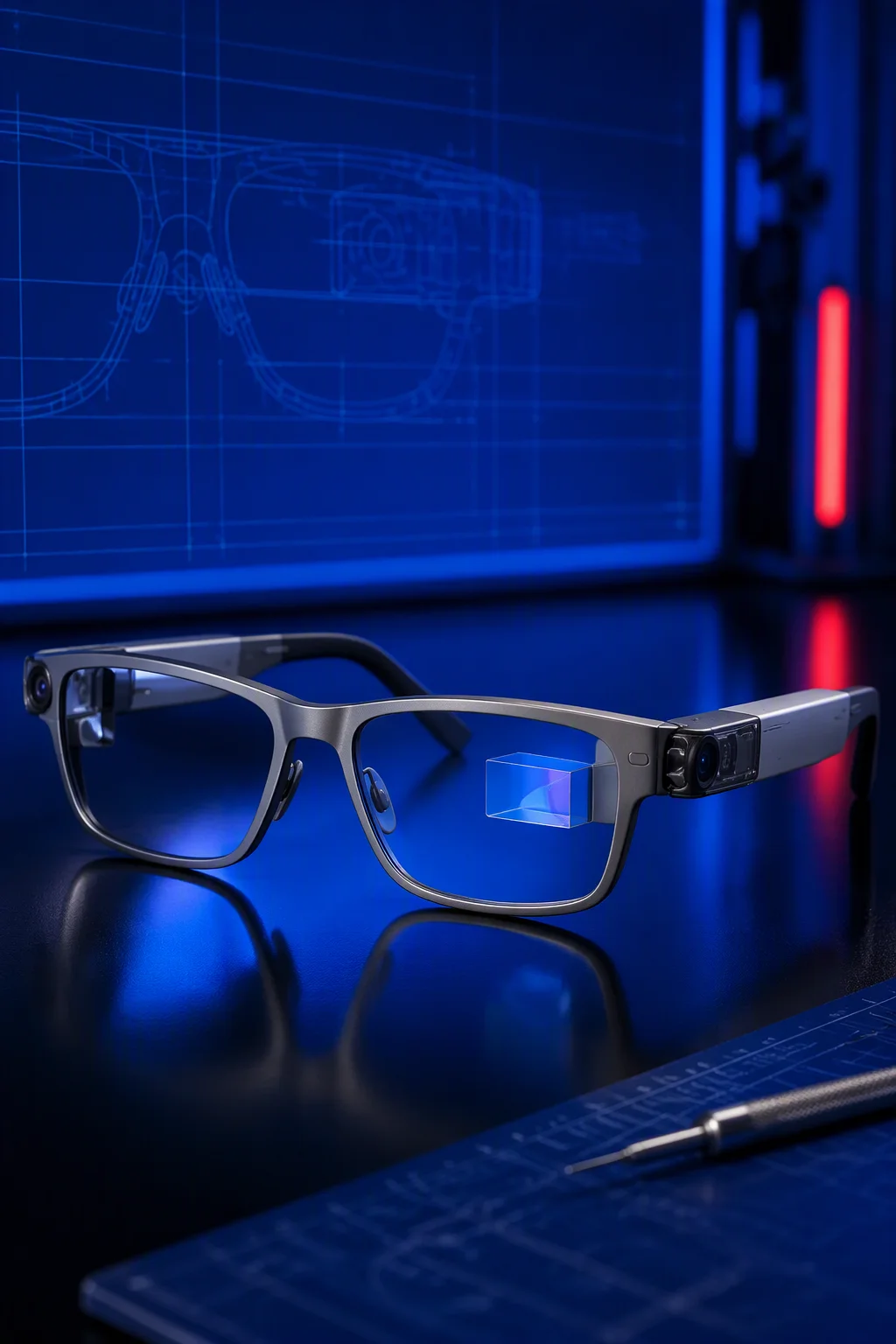
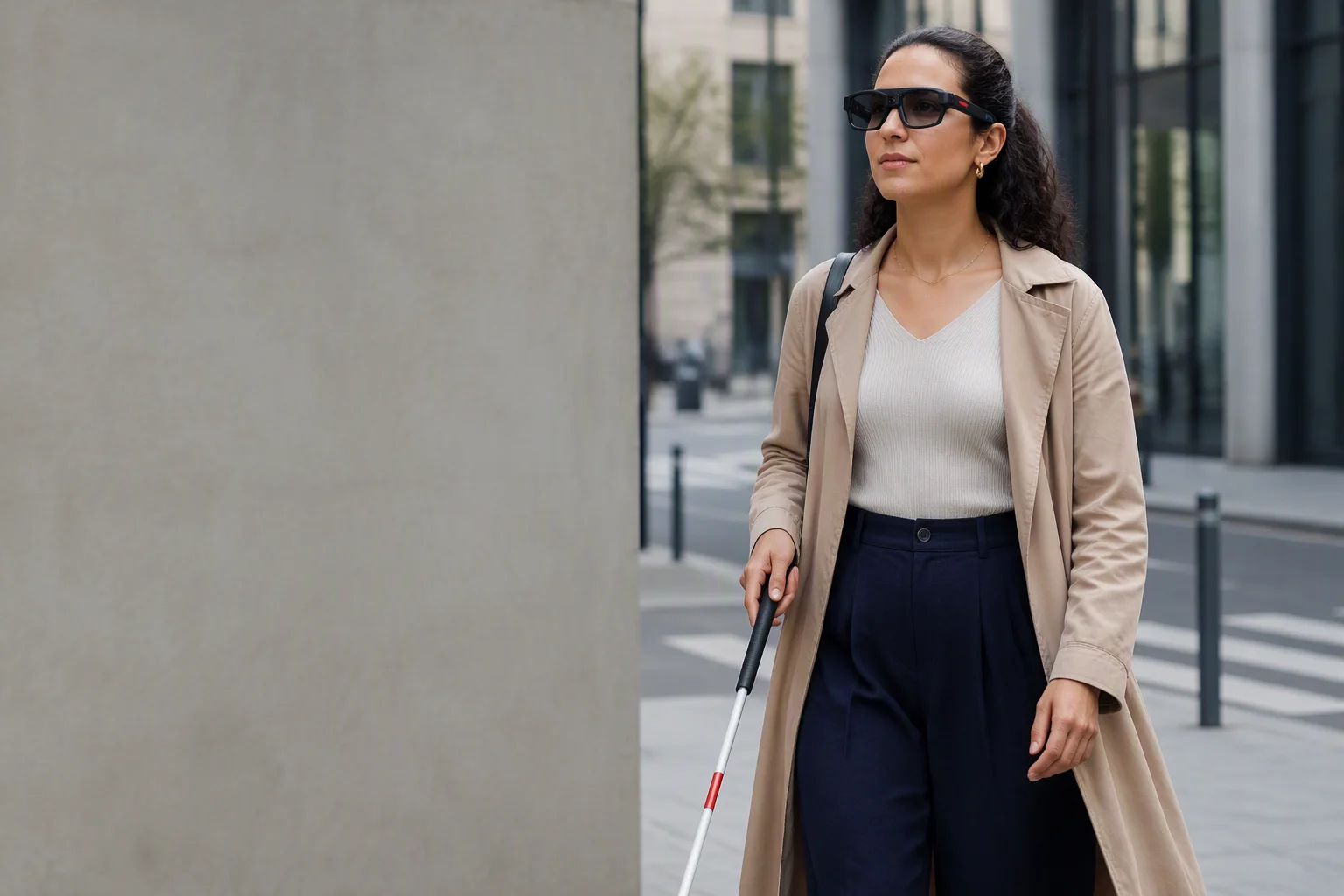
WHO counts 2.2 billion people living with vision impairment. Assistive smart glasses read printed text aloud, announce obstacles and guide movement by voice — from the 40–53-unit AIIMS pilot in India to the 15,000-unit distribution in Ireland. We build them as your OEM/ODM partner.
● Function Matrix SPEC. NO. EMS-ACC-FNC
Reading, Movement and Voice — in One Frame
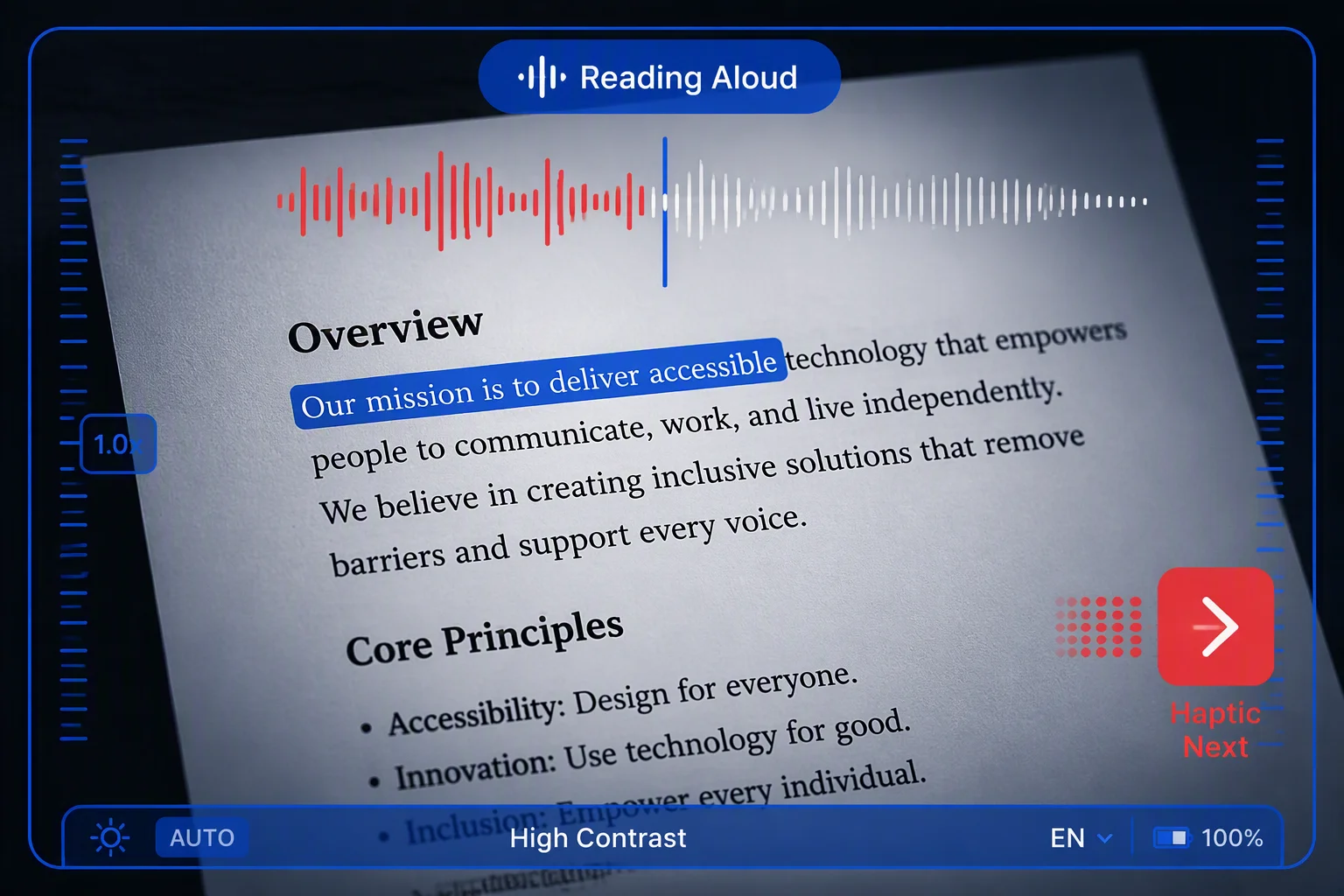
Printed text becomes speech, approaching obstacles trigger a voice or haptic alert, and magnification rescues small labels — all without a touchscreen, because the primary interface is the user's voice. The matrix below is the reference configuration we ship to institutional programs; every row is tunable for your distribution and your language markets. Institutional pilots consistently report that onboarding takes under one afternoon, which keeps training costs for care organizations close to zero.
| Function | Reference behavior | Notes |
|---|---|---|
| OCR read-out | Printed text → speech | Menus, mail, book pages |
| Voice guidance | Turn-by-turn audio | Navigation assistance |
| Obstacle awareness | Proximity alerts | Audio + haptic cues |
| Magnification | Digital zoom | Near and far reading |
| Language | 35–164 | Travel and day-to-day |
| Battery | 4–8 h | Full day with case |
| Weight | 30–50 g | Comfort across a full day |
| Charging | Magnetic + case | Low-vision friendly dock |
| Controls | Voice + physical | No touchscreen dependency |
| Connectivity | BT / WiFi | OTA feature updates |
| Safety option | ANSI Z87.1 / EN166 | Impact-rated variants |
| MOQ / lead time | 100 pcs / 14 d | Institutional pilots |
● Institutional Programs SPEC. NO. EMS-ACC-CAS
Proven at Pilot Scale, Ready for Distribution
Public-sector and NGO buyers are the fastest route to scale in this category. The three programs below show the arc from clinical pilot to national distribution — the same arc an OEM partner can replicate with a branded device and a local support network.
AIIMS, India
40–53 AI vision glasses issued to visually impaired users in a hospital-led pilot program.
ACC-02Vision Ireland
15,000 Meta AI glasses distributed to low-vision users through a national program.
ACC-03Hospital Pilots
Rehabilitation centers start with MOQ-100 batches and 14-day samples before scaling.
● Channel & Procurement SPEC. NO. EMS-ACC-CHN
Built for Institutional Procurement
| Government | Procurement programs for assistive technology |
|---|---|
| Charity & NGO | Distribution runs like Vision Ireland's 15,000-unit program |
| Rehabilitation centers | Low-vision clinics and training centers |
| Repeat purchase | Low-vision users show high device retention and repurchase |
| Localization | Domestic pilot pathways and funding programs |
| Certification | CE / FCC / UN38.3 documentation ships with every unit |
● Access Notes SPEC. NO. EMS-ACC-DEP
Inclusive by Default, Verified by Users
Voice-first means exactly that: every core function works without a screen, and haptic patterns confirm actions for users who cannot rely on visual feedback.
Reading modes cover menus, mail and book pages with adjustable speed; magnification rescues small labels at both near and far distances.
Institutional pilots typically run 30 to 60 days with a structured questionnaire — we ship the feedback form and tabulate the results with your program team.
The 22-billion-person market needs hardware that respects autonomy: no mandatory accounts, no always-on cloud, and National programs keep reordering because the device keeps improving through OTA updates without changing the hardware fleet, and pilot feedback from each cohort ships directly into the next firmware release.
● Next Step SPEC. NO. EMS-ACC-CTA
Build an Accessibility Program With Us
From a 40-unit pilot to a 15,000-unit distribution, we ship working prototypes 14 days after spec freeze and reply to every inquiry within 24 hours.